
Restoration
Fire, water and mold restoration in San Angelo.
House fires, leaking water heaters, burst supply lines and the mold that follows. We open it up, photograph it, and rebuild what the claim actually covers.
Yellow Rose Construction repairs fire, water and mold damage in San Angelo and the Concho Valley — including structural framing, subfloors, drywall, flooring and full cosmetic rebuilds. We photograph the damage as we open it so the scope you send your adjuster matches what is actually in the house.
Why this is different
Damage is always worse than the visible stain.
Water travels sideways and down. By the time a ceiling stains, the subfloor underneath has usually been wet for weeks. The visible damage is a symptom, not the scope.
That matters because an insurance scope is written from what can be seen and documented. If nobody photographs the wet subfloor under the tile, the claim pays for paint.
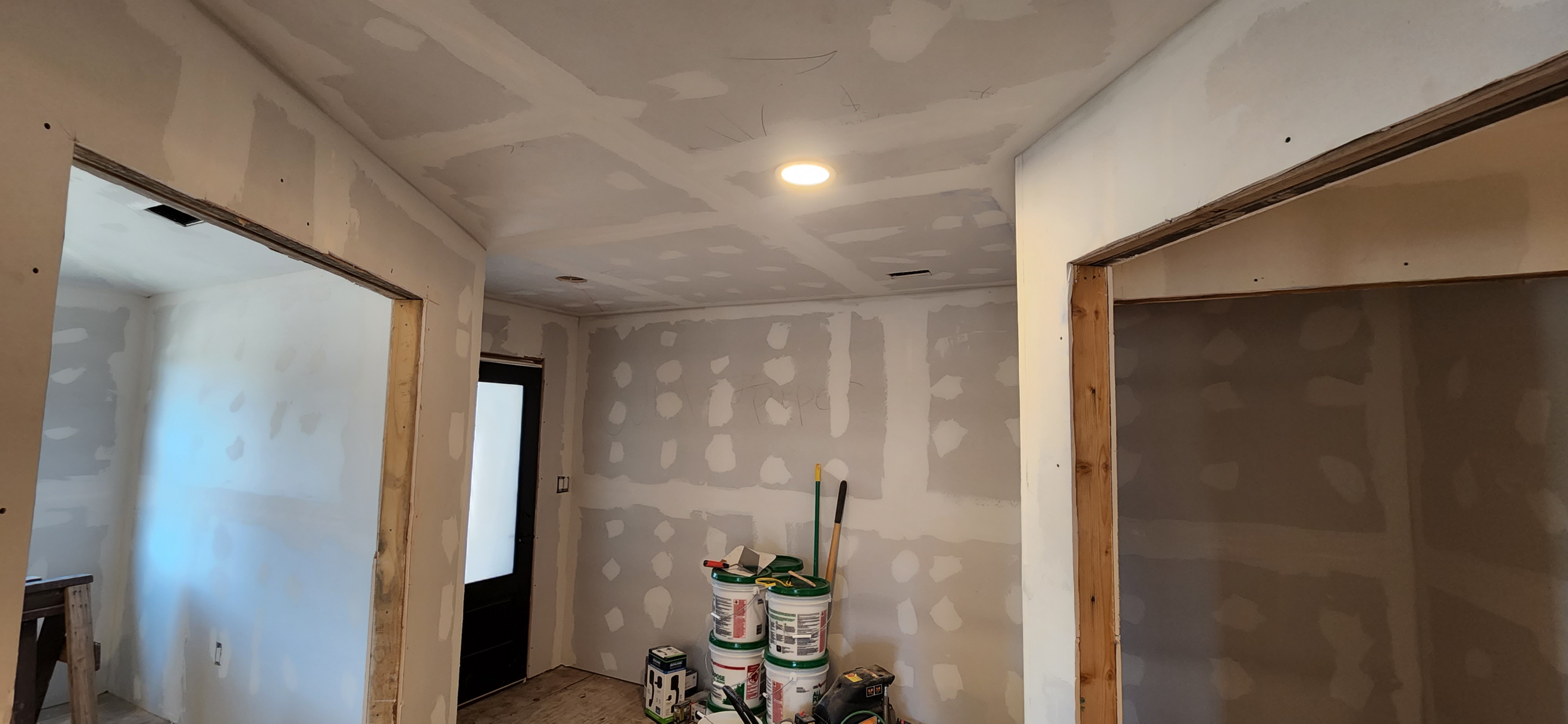
We open the assembly, document each layer as it comes apart, and rebuild from the structure out. That is the same discipline we apply to every remodel — it just matters more when a claim is paying for it.
- Photographed as we open it — framing, subfloor, insulation, the source of the water.
- Source fixed, not just the stain — a leaking water heater or supply line gets repaired before anything gets covered.
- Mold addressed at the material level — affected drywall and insulation removed rather than painted over.
- One crew from demo to finish — no handoff between the mitigation company and the rebuild.
The losses we see
Four kinds of call, one process.
Most restoration jobs in this part of Texas start with water, not fire. The fire calls are louder; the water calls do more damage over time.
Leaking water heater
The most common one. The tank lets go in a closet or attic and the water sits in the subfloor and carpet before anyone notices. We pull the wet material, treat the framing, and replace subfloor, flooring and trim.
Mold behind a wall
Usually a slow supply-line leak or a shower that has been failing quietly for years. The fix is removal of the affected material plus the source — not encapsulation over a live leak.
House fire and smoke
Structural repair, framing, roof, drywall, insulation, paint and finish. Fire jobs are sequencing jobs: make it dry and safe, then rebuild from the structure out.
Storm and roof leaks
Flat-roof sections and low-slope transitions are the usual suspects in San Angelo. We repair the roof and then repair what the roof did to the ceiling and insulation below it.
What to do in the first hour
- Shut the water off at the main, or the gas at the meter if it is a fire.
- Photograph everything before you move it. Wide shots, then close-ups.
- Do not pull wet carpet or drywall yourself. The pattern of damage is evidence.
- Call your insurer to open the claim, then call us for the scope.
How the claim runs
Four steps from damage to finished room.
You are not expected to know how a claim works. You are expected to notice damage and call somebody. Here is the sequence we work through with you.
Request an inspectionInspect and document
We look at the damage, photograph what is visible, and tell you what is likely behind it before anyone commits to a scope.
Open and verify
Once the claim is open, we remove the affected material and document each layer. This is the evidence the adjuster needs.
Scope and rebuild
Structural and mechanical repair first, then drywall, flooring, paint and finish — priced against the approved scope.
Walk it with you
A punch walk at the end with the photos of what was behind the wall, so you know what was actually fixed.
Restoration questions
What people ask after the water shows up.
Do you work directly with insurance adjusters?
We document the damage and rebuild to the approved scope. You stay the policyholder and the decision-maker; we make sure the evidence exists to support what the house actually needs, rather than what a photo of the ceiling suggests.
Will my insurance cover mold?
That depends on your policy and on the cause. Mold that results from a sudden, covered event is usually treated differently than mold from long-term neglect. We will tell you what we see and document it accurately — we do not write the coverage decision.
Can I stay in the house during the repair?
Often yes for a contained loss like a water heater or a single bathroom. A fire with structural damage or no working utilities usually means moving out for part of it. We will tell you honestly which situation you are in.
Should I repair the roof first or the ceiling?
The roof. Nothing inside stays fixed while water is still getting in. We repair the source, then the damage it caused — in that order, every time.
Do you handle small losses, or only big ones?
Both. We have handled house fires and we have handled a single leaking water heater that took a laundry room floor with it. Big or small, the process is the same.
Water is patient. Get it looked at now.
Free inspection within 50 miles of San Angelo. If the damage is smaller than you feared, we will tell you that too.