
Bathrooms
Bathroom remodeling in San Angelo, TX.
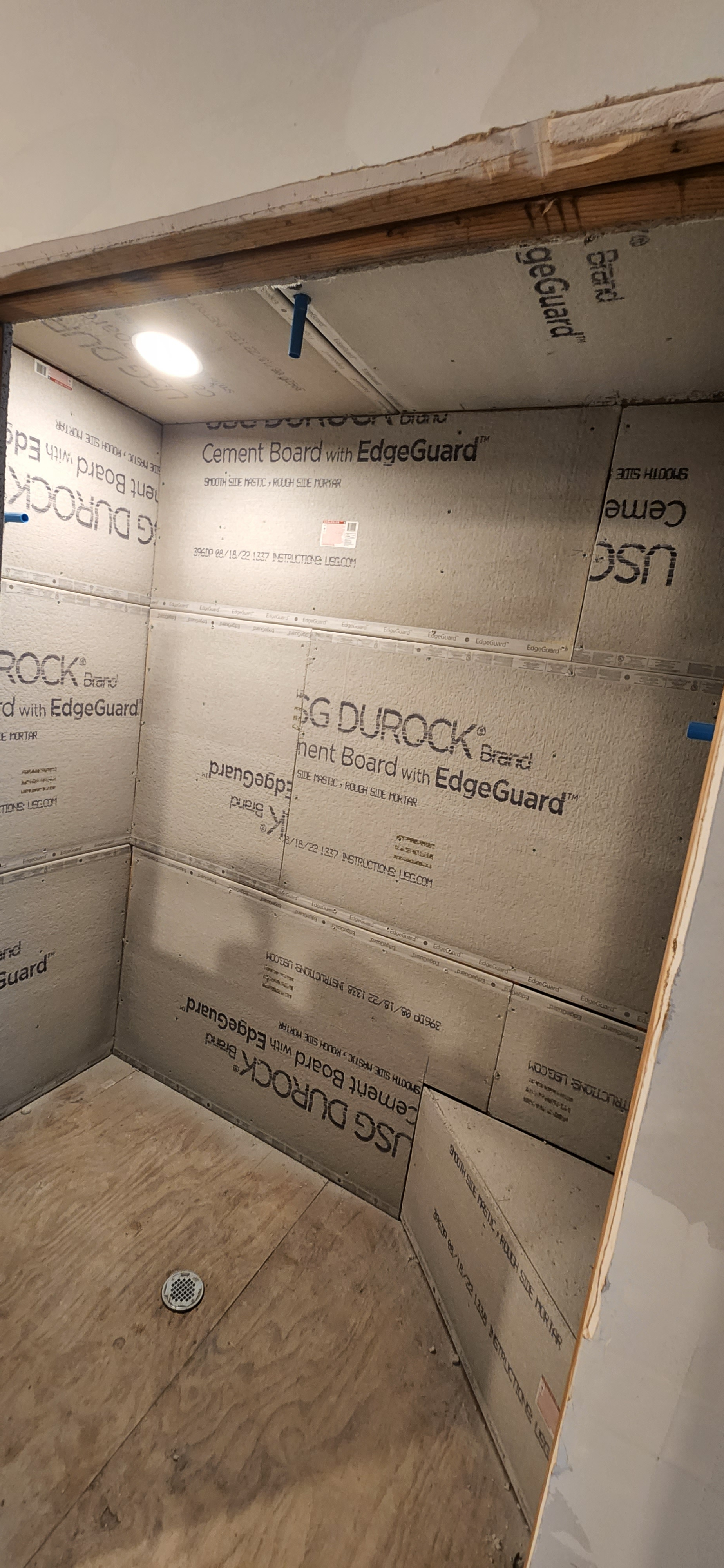
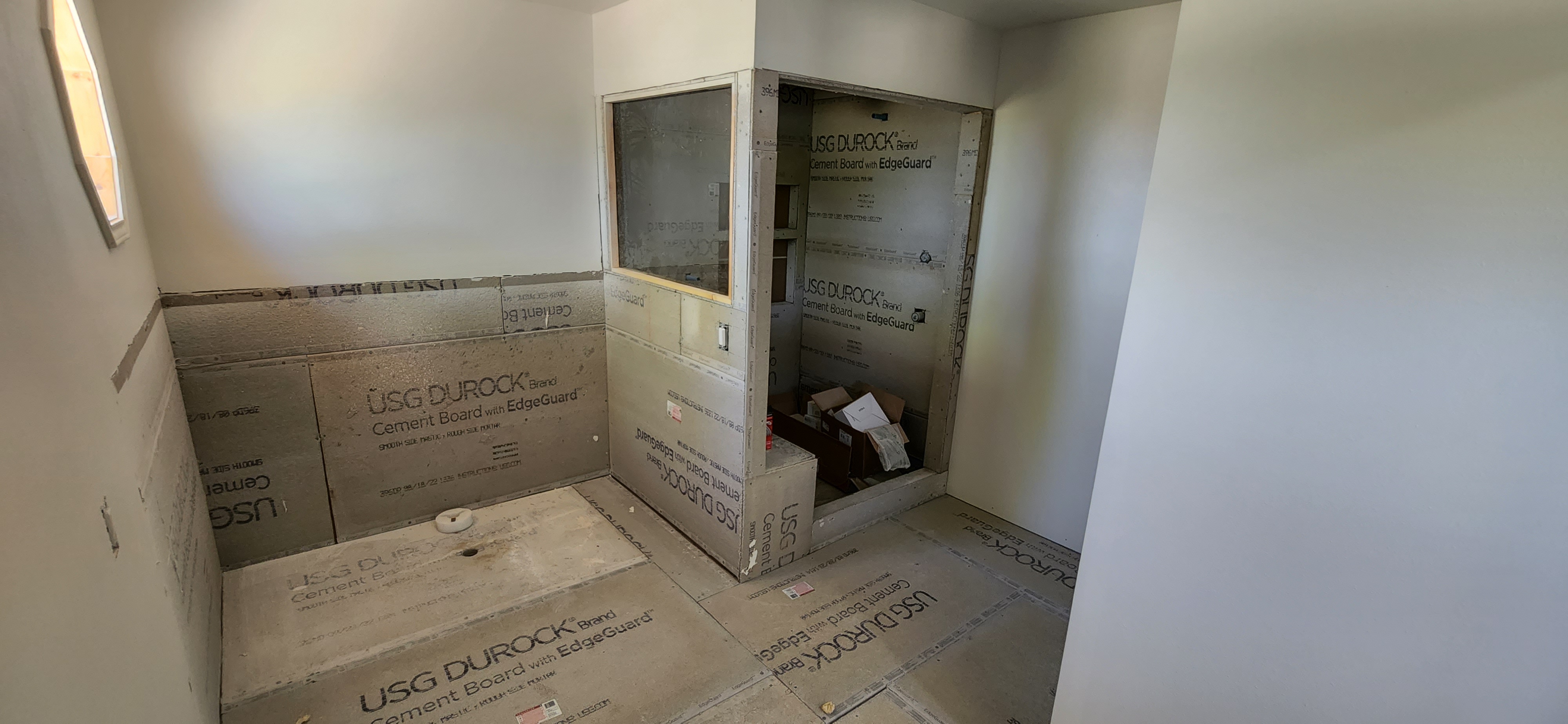
Walk-in showers, tub surrounds, vanities and tile — built on cement backer board, with the waterproofing photographed before the finish covers it.
Yellow Rose Construction remodels bathrooms in San Angelo and the Concho Valley — custom walk-in showers, tub refurbishment or replacement, vanities, tile and plumbing. The shower gets cement backer board and a proper waterproofing layer, and we photograph it before tile goes up.
The invisible part
A bathroom is judged on a layer you will never see again.
Every beautiful bathroom is a waterproofing job wearing tile. If the layer behind the tile is wrong, the room fails on a schedule nobody can see until it does.
This is why bathroom photos are the least useful photographs in remodeling. Two bathrooms can look identical on the day they are finished and behave completely differently in year six. The difference was decided before the first tile was set.
Ours get documented at that stage. Not because it photographs well — because it is the only honest evidence we can hand you.
- Cement backer board in wet areas, not moisture-resistant drywall.
- Pan and seams treated before the tile, not after the leak.
- Plumbing replaced while the wall is open — not reconnected to a forty-year-old valve.
- Ventilation checked, because most bathroom mold in West Texas is a fan problem before it is a water problem.
The build order
Three layers, in this order.
A bathroom is built from the studs out, and each layer hides the one before it. Skip a step and the next one looks fine anyway — for a while.
Framing and rough-in
Rot repaired, studs straightened, supply and drain moved to the new fixture locations, valve set at the right height while the wall is open.
Backer and waterproofing
Cement board, seams and corners treated, pan built to slope. This is the stage we photograph and the stage most portfolios skip.
Tile, fixtures, finish
Tile set on a flat substrate, grout and sealant, vanity, toilet, glass, paint and trim. The part everybody sees.
Real jobs
What we have built lately.
Most of our bathroom work is a full rebuild of a room that was tired, leaking, or both. Here is what that has looked like.
- Lake Ivie — custom walk-in shower for a fellow Marine, Gunnery Sergeant Dan Whitehead. Full tear-out, new pan, new surround.
- San Angelo — new plumbing and shower surround with a refurbished original tub rather than a replacement. The tub was solid; the plumbing was not.
- San Angelo — full bath and dressing room with granite counters, new sinks, tub, toilet, custom-coloured fixtures and fresh paint throughout.
- Insurance rebuilds where a leaking water heater or supply line took the subfloor with it.
Timeline
What a bathroom actually takes.
A single bathroom can move quickly — we have turned small jobs in days, not months. The variables are tile complexity, fixture lead time and what the demo finds.
You get the sequence and the disruption days up front: when the water is off, when the toilet is out, and when the room comes back.
Book a walkthroughMeasure and decide
Layout, shower size, tile, vanity, fixtures. Decisions before demo keep the schedule honest.
Tear out and inspect
What is behind the tile gets photographed. Rot and old leaks get priced separately, in writing.
Rough-in and waterproof
Plumbing, electrical, backer board, pan. The stage we document.
Tile, fixtures, handover
Tile, grout, glass, vanity, toilet, paint, trim and a punch walk with you.
Bathroom questions
What homeowners ask us first.
Can you convert my tub into a walk-in shower?
Yes, and it is one of the most common requests we get. The tub comes out, the drain gets relocated, the pan gets built and the walls get backer board. The main variables are the existing drain location and whether the floor framing needs to change.
Is it worth refinishing the tub instead of replacing it?
Sometimes. We refurbished a solid original tub rather than sell a replacement on a job where the plumbing was the actual problem. If the tub is sound, keeping it can put the budget into waterproofing and tile instead.
Why does the waterproofing matter so much?
Because it is the only part of the room that cannot be inspected after the fact. Cement board, treated seams and a properly sloped pan are what stop the failure that shows up as a soft spot, a loose tile or a stain on the ceiling below.
Do you handle mold found during a bathroom demo?
Yes. Mold behind tile usually means a long-running leak, and the fix is removal plus the source. We document it as we open the wall, which is also what an insurance adjuster will want to see.
How long is my bathroom out of service?
The toilet and water are typically down for the rough-in and tile window rather than the whole project. We give you those specific dates before we start so you can plan around them.
Show me the shower before the tile goes on.
That is the whole pitch. Free estimate, and you will see the layer that decides whether the room lasts.